
If you are new to cross stitch, the first trip to a craft store can feel like learning a new language. 14-count Aida, 16-count, 18-count… what does the number even mean?
Here is the short answer: the count tells you how many stitches fit in one inch of fabric. 14-count Aida has 14 holes per inch, 16-count has 16, and 18-count has 18. The higher the count, the smaller your stitches — and the smaller your finished project.
But which one should you actually stitch on? Let’s break it down.
What Does “Count” Mean?
Aida fabric is woven with a grid of visible holes, which is exactly why beginners love it — you can see exactly where every stitch goes.
- 14-count (14ct): 14 stitches per inch. The classic choice.
- 16-count (16ct): 16 stitches per inch. A step up in fineness.
- 18-count (18ct): 18 stitches per inch. Small, detailed work.
When a pattern says “finished size: 5.7 x 8.6 inches on 14-count Aida,” it means the size depends on the fabric you choose. Stitch the same pattern on 18-count and it comes out noticeably smaller. The chart itself does not change — the same grid of stitches simply takes up less space on finer fabric.
Aida 14: The Beginner’s Best Friend
Use 14-count if: you are new to stitching, or you like a relaxed, chunkier look.
- Holes are big enough that you never struggle to find them
- Crosses look neat even if your tension isn’t perfect yet
- The finished piece is larger, so small charts feel more satisfying
- Almost every pattern’s size guide uses 14-count as the reference
14-count is also the most forgiving fabric for learning: a slightly uneven stitch is invisible at arm’s length, and the larger holes mean you can use a thicker needle (size 24), which is easier for beginner hands to hold. The only downside? 14-count shows off every imperfection in your tension up close, and very detailed designs (think 200 x 200 stitch fairy charts) become large pieces of fabric.
Aida 16: The All-Rounder
Use 16-count if: you have finished a project or two and want a finer finish without much extra difficulty.
- Stitches are smaller, so details look crisper
- The fabric still has clearly visible holes — easier than 18-count
- Good middle ground for both mini patterns and large projects
Many stitchers who stay on 14-count never try 16 — but if you want your finished piece to look “store-bought,” 16 is where that starts to happen. Text, borders, and small motifs all read more crisply at 16-count, which is why it is the default for gift-quality pieces like bookmarks and cards. You will want a size 26 needle, but no other changes are needed.
Aida 18: For Fine Details
Use 18-count if: you are stitching a detailed design (portraits, fairies, small ornaments) or you simply prefer tiny, pixel-perfect stitches.
- Smallest finished size for the same chart
- Best for ornament-sized projects and cards
- Holes are smaller, so you may want a #26 or #28 needle and a good lamp
18-count is not harder in terms of technique — it’s just more demanding on your eyes. If you are stitching a big advanced chart like a 200 x 200 fairy pattern and want it to fit a standard frame, 18-count is often the smart choice. Stitches at 18-count look almost like woven tapestry from a distance, which is why finishers love it for portraits and photorealistic designs.
Quick Comparison Table
| 14-count | 16-count | 18-count | |
|---|---|---|---|
| Stitches per inch | 14 | 16 | 18 |
| Finished size (100 x 100 chart) | 7.1 x 7.1 in | 6.3 x 6.3 in | 5.6 x 5.6 in |
| Finished size (100 x 100 chart) | 18 x 18 cm | 15.9 x 15.9 cm | 14.1 x 14.1 cm |
| Recommended needle | 24 | 26 | 26-28 |
| Beginner friendly | ★★★ | ★★ | ★ |
| Detail level | Good | Better | Best |
| Best for | First projects, relaxed stitching | All-round, gifts | Ornaments, fine detail |
How to Check Finished Size on a Pattern
Every pattern on this site lists its finished size on 14-count Aida, for example:
> “80 x 120 stitches, finishing at about 14.5 x 21.8 cm (5.7 x 8.6 in) on 14-count Aida.”
If you want it bigger: use 14-count. If you want it smaller or finer: use 16 or 18-count. A simple formula: finished size = stitch count ÷ fabric count. A 50 x 50 chart on 14ct is about 3.6 inches; on 18ct it drops to 2.8 inches. This matters when you plan framing: a chart that is 100 x 200 stitches fits a standard 8 x 10 frame on 14-count, but you would need to check the border allowance on other counts.
Common Mistakes When Choosing Fabric
- Buying fabric without checking the pattern’s stitch count. A 300 x 260 chart on 14-count is a huge 21.4 x 18.6 inches; on 18-count it is a manageable 16.7 x 14.4 inches. Always multiply before you buy.
- Choosing 18-count for a first project. Fine fabric is lovely, but beginners need the visible holes of 14-count to build confidence. Move up counts as your eyes and hands adapt.
- Forgetting the border allowance. A design exactly matching the fabric size leaves nothing for hooping or framing — add 3-4 inches per side.
- Assuming the count from a photo. Fabric count is not visible in a photo; always read the label. Two “looks identical” fabrics can be 14 and 18 count.
What About Other Fabric?
- Evenweave and linen: finer weave, no visible grid — more advanced, skip for now. Stitch over two threads, so the effective count is half the printed number.
- Plastic canvas: stiff, used for ornaments and 3D projects.
- Aida band: pre-edged strips, great for bookmarks and samplers.
- Colored Aida: black and navy Aida is stunning for night-sky and white-flower designs — just remember you will want a light-colored lap cloth and good lighting, because the holes are harder to see.
My Recommendation for Beginners
- Buy one piece of 14-count white Aida (about 30 x 40 cm, plenty for your first projects)
- Stitch a mini pattern first — a 50-60 stitch chart takes an afternoon and teaches you everything: starting, crossing, finishing, and backstitch if the pattern has it
- Then try 16-count on your second project to feel the difference
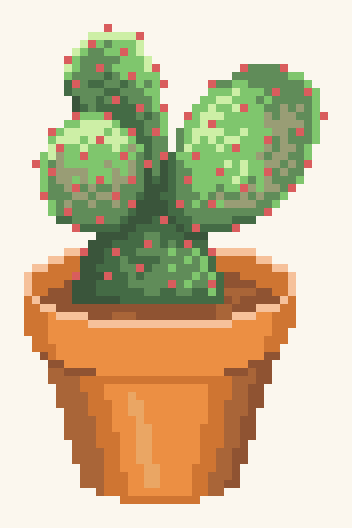
If you want three or four quick projects to practice on, the Mini Fruit Collection — four easy charts between 50 and 61 stitches — was designed exactly for this. And if you prefer a plant that can’t die, our Cactus Cross Stitch Pattern is a tiny 38 x 60 chart that’s perfect for trying out 16-count for the first time.
Fabric Myths Worth Ignoring
Three ideas about fabric count scare beginners more than they should:
- “Higher count = harder stitching.” The technique is identical; only the hole size changes. If you can see the holes and hold a needle, you can stitch any count.
- “I must match the pattern’s count exactly.” Any chart can be stitched on any count — you are only changing the finished size. Decide on the size you want, not on a rule.
- “One count fits every project.” Most stitchers keep all three in their stash: 14-count for relaxed projects, 16 for gifts, 18 for ornaments and fine detail.
If you are brand new to cross stitch, our step-by-step beginner guide covers fabric, needles, and your first stitches before you spend anything.
Frequently Asked Questions
Does a higher count make the pattern harder to stitch? No — the technique is identical. The only real difference is eye strain. If you can see the holes, you can stitch the count. Beginners usually prefer 14-count, but many move to 16 within their first few projects.
Can I stitch a 14-count pattern on 16-count fabric? Yes. The chart is the same; only the finished size changes. Divide the stitch count by 16 instead of 14 to get the new size. If you plan to frame the piece, do this calculation before you buy fabric.
Which count should I use for tiny patterns like ornaments? 18-count (or even 20-count) is ideal for ornament-sized projects because the smaller stitches make the finished piece look refined at a small scale. On 14-count, the same chart can look loose and oversized.
How much fabric should I add around the design? A safe rule is 3-4 inches (8-10 cm) of extra fabric on every side — enough for hooping, finishing, and framing. For a design that is 100 stitches wide on 14-count, buy at least 13 x 13 inches of fabric.
What needle should I use with each count? Size 24 for 14-count, size 26 for 16-count, and size 26-28 for 18-count. The needle should slide through the hole without forcing it — if it tugs, go one size smaller.
Ready to Start?
Every pattern on this site is an instant PDF download with a full DMC color key, symbol chart, materials list and a step-by-step beginner guide — so the fabric is the only thing you need to buy. Browse all patterns or grab a free mini pattern to test your fabric choice at zero cost. If this is your very first project, read how to read a cross stitch chart first — ten minutes of chart basics saves hours of frustration.
Happy stitching! — ZhiYuan Studio