
Every cross stitch pattern you buy comes with a list of thread numbers, and if you are new to the craft, those tiny codes can look intimidating. The good news: the DMC numbering system is far simpler than it seems. Once you understand it, you can shop for floss with confidence and keep your stash organized for years.
What Do the Numbers on Your Pattern Mean?
DMC is the world’s most widely used embroidery floss brand, with over 500 solid colors. Every color has a unique code — usually 1 to 4 digits, occasionally with a letter — printed on the skein’s paper band. That code is what your pattern references.
Some common examples you will see in charts:
- 310 — classic black
- B5200 — bright snow white (the “B” marks it as a special batch)
- 666 — bright red
- 3865 — winter white, a soft off-white
- 3774 — desert sand, a warm beige skin tone
The code always refers to the exact same color worldwide, so a 310 bought in New York matches a 310 bought in London. That consistency is why patterns list numbers instead of vague names like “dark blue.”
The Hidden Logic of DMC Numbering
DMC numbers are not random — they cluster by color family. Once you know the rough ranges, you can glance at a pattern’s color list and picture its palette before you open a single skein:
| Number range | Color family | Typical use |
|---|---|---|
| 100-199 | Ivories, creams, tans | Backgrounds, skin highlights |
| 300-399 | Rusts, brick reds, warm browns | Autumn leaves, terracotta |
| 400-499 | Deep browns | Hair, wood, soil |
| 500-599 | Greens | Leaves, stems, landscapes |
| 600-699 | Reds, pinks | Flowers, accents, celebrations |
| 700-799 | Yellows, oranges | Suns, sunflowers, gold details |
| 800-899 | Blues, blue-greens | Sky, water, denim tones |
| 900-999 | Deep purples, wine | Shadows, royal palettes |
| 3000-3999 | Miscellaneous classics | Skin tones, muted shades |
| B5200 | Bright snow white | Purest white highlights |
These ranges are a guide, not a rule — always trust the exact number on your pattern. But the clustering is handy for two real situations: finding a color at a disorganized shop (a “6xx” is somewhere in the red-pink family) and understanding a pattern’s mood before buying thread.
Essential DMC Numbers Every Stitcher Should Know
While your pattern’s color key is always the authority, a handful of DMC numbers appear in chart after chart. Knowing them by sight saves a trip to the shop — and recognizing them on a chart page helps you picture the finished design before you buy thread:
| Number | Color | Classic use |
|---|---|---|
| B5200 | Snow white (bright) | Highlights, snow, stars |
| Ecru | Natural off-white | Backgrounds, linen looks |
| 310 | Black | Outlines, backstitch, dark shadows |
| 321 | Classic red | Hearts, flowers, festive designs |
| 3371 | Black brown | Hair, wood, animal outlines |
| 415 | Pearl gray | Soft shadows, silver tones |
| 469 | Avocado green | Leaves and stems |
| 728 | Topaz gold | Sunlight, gold details |
| 825 | Blue | Sky, water, denim |
| 601 | Cranberry | Bold pinks, lips, berries |
Notice how many of these are also the anchors of our Chinese-inspired charts — 310 outlines, 728 gold, 321 vermilion — the same few threads do an enormous amount of work across very different designs.
A practical habit: before committing to a substitute shade, buy a single skein and lay it beside the pattern’s preview image in daylight. Monitors shift colors and dye lots shift over time, so the “close enough” skein that looks fine in the shop can look wrong on the finished piece. Ten minutes of checking beats re-buying floss or frogging a section later.
One more detail worth knowing: a small “V” on a DMC label marks variegated floss, which shifts between two or three shades along a single strand. Variegated threads appear in some landscape and water charts to create subtle natural gradients without changing thread — a lovely effect, and easy to spot once you know the label.
Once your stash reaches ten or fifteen colors, wind them onto labeled bobbins and sort by number — the ten-minute habit that makes every future project one minute to start. For a full orientation to the hobby, our cross stitch guide for beginners covers supplies, fabric, and first stitches from zero.
How DMC Numbers Appear in ZhiYuan Studio Patterns
Every ZhiYuan Studio pattern includes a complete color key in the PDF blueprint. A typical key entry looks like this:
▲ 310 Black — 2 skeins
- The symbol (▲) matches the symbol printed on the chart grid — find it, stitch it.
- The DMC number (310) is what you ask for at the shop.
- The color name helps you recognize it in your stash.
- The skein count tells you exactly how much to buy — no guesswork.
This three-part system (symbol + number + amount) means you never have to wonder which thread a chart square is asking for. If you are new to symbol charts, our how to read a cross stitch chart guide walks through the full process.
How Much Floss Should You Buy?
A standard DMC skein is 8 meters (about 8.7 yards) of six-strand floss. How far that goes depends on your fabric:
- On 14-count Aida, one skein covers roughly 1,800 full stitches when stitching with two strands.
- On 16-count Aida, the same skein covers fewer stitches, because there are more stitches per inch.
If you are unsure which fabric count to choose, our guide on Aida 14 vs 16 vs 18 count breaks down the trade-offs in detail.
Quality patterns — including every ZhiYuan Studio blueprint — already calculate yardage for you, so you can buy floss before you make the first stitch and avoid mid-project runs to the craft store. For a small project (under 60 stitches), one skein of each listed color is always more than enough; most mini charts use a fraction of a single skein per color.
What About Other Thread Brands?
You will sometimes see other brands at craft stores — Anchor, Cosmo, and generic unbranded floss. A few honest notes:
- DMC and Anchor are not interchangeable. Their color numbers are entirely different systems; a pattern’s “DMC 310” does not tell you which Anchor color matches.
- Online conversion charts exist but are approximate. Dye lots and color batches shift over time, so a “close match” can be visibly off on a finished piece.
- Generic floss may lack colorfastness. Cheap floss can bleed when washed — a real risk for a project you plan to keep for decades.
For these reasons we design every ZhiYuan chart specifically around the real DMC palette, and we recommend sticking to genuine DMC for the colors on the key. If you must substitute, buy a small sample and compare it against the preview image under daylight first.
Tips for Choosing and Storing Floss
- Trust the pattern’s color list. The colors were chosen against the real DMC palette, so the stitched piece will match the preview image.
- Check the dye lot. When buying multiple skeins of one color for a large project, make sure the batch number on the paper bands matches — different dye lots can differ slightly.
- Wind onto bobbins. Plastic bobbins with the DMC number written on them keep colors sorted and tangle-free.
- Store away from sunlight. Floss keeps its color for decades when stored in a box out of direct sun.
- Buy one extra skein of the darkest color. On any chart, the darkest shade is the first to run out and the hardest to match later.
- Label with a permanent marker, not a sticker. Bobbin stickers peel off in a year; a marker lasts a lifetime.
Frequently Asked Questions
How many strands of floss should I use? Two strands on 14-count Aida is the standard for full crosses; one strand is used for backstitch and fine details; three strands suit looser weaves. Your pattern’s instructions override any general rule — check them first.
What is the difference between DMC 310 and B310? There is no B310. The “B” prefix appears only on special bright shades like B5200 (snow white). If a pattern lists B5200, do not substitute regular white — the brightness difference shows on white fabric.
Can I wash a finished piece with DMC floss? Yes. DMC is colorfast; hand-wash the finished piece gently in cool water with a mild soap, rinse, roll in a towel, and iron on the reverse side while damp. Avoid bleach and wringing.
Why does my pattern list different numbers than a friend’s pattern for the same flower? Different designers use different DMC shades for the same subject — that is normal and why every pattern ships its own color key. There is no “correct” DMC for a rose; there is only the palette your pattern specifies.
Try It With a Free Pattern
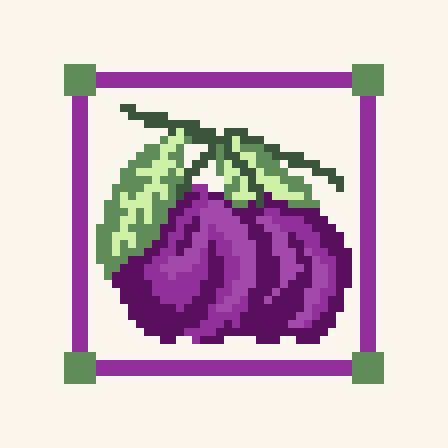
The fastest way to get comfortable with DMC numbers is to stitch a small project. Download our free mini fruit cross stitch pattern — it uses a compact palette of beginner-friendly colors and includes a full key, so you can practice reading numbers and symbols on a design that finishes quickly.
When you are ready for a bigger challenge, browse our full pattern collection — every design ships with a complete DMC color key, yardage estimates, and a step-by-step stitch guide, so your thread drawer and your finished piece stay equally beautiful.