
For more than two thousand years, Chinese embroidery has been one of the world’s most admired textile arts. From the silk robes of imperial court ladies to delicate Suzhou double-sided embroidery, Chinese needlework has always blended storytelling, symbolism, and breathtaking color. Today, that same elegance is finding a new home in cross stitch — and stitchers around the world are falling in love with Chinese-inspired patterns.
A Brief History of Chinese Embroidery
Chinese embroidery dates back to the Warring States period (475–221 BC), when silk thread and fine needles made detailed stitching possible for the first time. Over the centuries, four regional schools emerged — Suzhou (Su), Hunan (Xiang), Sichuan (Shu), and Guangdong (Yue) — each with its own signature stitches and motifs.
Imperial embroidery, reserved for the emperor’s household, was the pinnacle of the craft. Court ladies in flowing Hanfu robes, phoenixes, peonies, and lotus ponds were stitched with silk floss so fine that a single thread was split into dozens of strands. The designs were not just decoration — every motif carried meaning: the peony stood for wealth and honor, the phoenix for grace and virtue, and the plum blossom for resilience.
For a stitcher today, the most inspiring thing about this tradition is how chartable it is. Imperial motifs were designed on grids of counted silk thread, which means they translate into counted cross stitch almost naturally — the same squares, the same discipline, the same patient repetition.
The Four Schools and Their Motifs
| School | Region | Signature style | Classic motifs |
|---|---|---|---|
| Su (苏绣) | Suzhou | Fine, smooth satin stitch | Cats, flowers, double-sided work |
| Xiang (湘绣) | Hunan | Bold colors, textured layers | Tigers, landscapes |
| Shu (蜀绣) | Sichuan | Soft, bright, folk flavor | Carp, pandas, lotus |
| Yue (粤绣) | Guangdong | Dense, vibrant, gold thread | Phoenixes, birds, fish |
When you see a “Chinese style” cross stitch chart, its palette and composition usually echo one of these four traditions — vermilion and gold from Yue, soft gradients from Su, bold contrasts from Xiang.
The Color Language of Imperial Embroidery
Imperial Chinese embroidery is instantly recognizable by its confident palette. Learning the color language makes choosing threads and reading charts easier — and it explains why Chinese-inspired designs feel so different from Western pastel charts:
- Vermilion red (朱红) — joy, celebration, and imperial authority. In DMC terms, think 666 and 321; the red family carries most of the symbolic weight.
- Imperial gold (金色) — wealth and the emperor himself. Warm golds such as 728 and 783 add that gilded glow to any design.
- Celadon green (青绿) — jade, spring, and renewal. Soft greens like 504 and 563 give the palette its cool balance against red and gold.
- Ink black (墨色) — outlines, calligraphy, and contrast. DMC 310 anchors the design, just as ink anchors a painted scroll.
- Imperial yellow (明黄) — historically reserved for the emperor’s household; today it reads as warmth and festivity.
| Role in the design | Traditional color | DMC examples |
|---|---|---|
| Robes and joy accents | Vermilion red | 666, 321, 304 |
| Gilded trim and lanterns | Imperial gold | 728, 783, 973 |
| Garden and jade | Celadon green | 504, 563, 471 |
| Outlines and calligraphy | Ink black | 310, 3799 |
One of the craft’s most astonishing achievements is Suzhou’s double-sided embroidery — two flawless faces worked on a single transparent silk ground, with every knot hidden inside the fabric. You will not find that technique in a cross stitch chart, but the same spirit lives there: counted work rewards the same patience, and a well-finished piece looks equally good from a step away or a close look.
When a Chinese-inspired chart arrives with 30 colors, most of them are shades within these families — reds for the robes, golds for the trim, greens for the garden setting. That is why the finished piece feels coherent rather than busy: the palette follows a tradition, not a random rainbow. Once you can spot the four families in any chart, choosing fabric (ivory or deep navy both work) and planning floss becomes second nature.
If the Imperial Court Lady feels ambitious for now, our paper-cut style guide introduces the same color tradition in bold, beginner-friendly shapes — and if you are new to reading charts altogether, start with our complete beginner guide.
What Makes Chinese-Inspired Cross Stitch Patterns Special
When traditional Chinese art meets cross stitch, the result is a pattern style unlike anything else in your collection:
- Bold, meaningful palettes. Chinese art favors confident color combinations — vermilion red, celadon green, imperial gold, and ink black — rather than soft pastels. A single pattern can feel rich and ceremonial.
- Elegant figurative subjects. Palace maidens, scholars, and classical garden scenes give you a finished piece that looks like a painting, not just a chart.
- Symbolic details. Lanterns, fans, hairpins, and floral borders are small motifs that carry big cultural meaning — and they stitch up beautifully in counted work.
- A striking display piece. Framed Chinese-style cross stitch looks at home in any interior, from modern minimal to traditional.
Introducing the Imperial Court Lady Pattern
If you want to experience this style for yourself, our newest design is the perfect starting point: the Imperial Court Lady cross stitch pattern.
This Advanced-level chart (200 x 200 stitches, 30 DMC colors) captures an elegant palace maiden in traditional Chinese attire, surrounded by the warm, gilded atmosphere of a classical courtyard. The pattern includes a full 10-page PDF blueprint with a complete DMC color key, symbol chart, and a materials guide — everything you need to begin, plus PAT and XSD files for pattern software users.
This is the pattern to stitch when you want a months-long companion: the fine detail work rewards slow, careful sessions, and the finished piece — roughly 14 x 14 inches on 14-count Aida — is a genuine wall statement.
How to Stitch Chinese-Inspired Designs Successfully
Chinese-style charts tend to be medium to advanced, so a few habits will keep the project joyful:
- Sort your DMC threads by number before you start. A 30-color chart demands organization; labeled bobbins are worth the hour they take.
- Work in 10×10 blocks. The Imperial Court Lady’s fine detail makes it easy to lose your place — block-by-block work keeps errors small and fixes quick.
- Stitch backstitch last. Chinese motifs rely on crisp outlines; backstitch worked on top of finished crosses gives the cleanest result.
- Use a scroll frame for large pieces. 200 x 200 stitches in a hoop means constant re-hooping; a scroll frame keeps tension even and fabric clean.
- Take progress photos. Large projects live or die on motivation — a photo every ten rows shows the face emerging.
How to Style Chinese Cross Stitch in Your Home
One of the joys of Chinese-inspired cross stitch is how naturally it frames. Here are a few display ideas:
- Pair with a black or dark wood frame to let the warm golds and reds glow.
- Hang as a set. Stitch two or three Chinese-themed pieces with similar palettes and display them in a row.
- Gift for festivals. A finished Chinese-style piece makes a memorable gift for Lunar New Year, weddings, or housewarmings.
- Add a fabric mat. A cream or ivory mat between the piece and the frame gives the design breathing room and mimics traditional scroll mounting.
Frequently Asked Questions
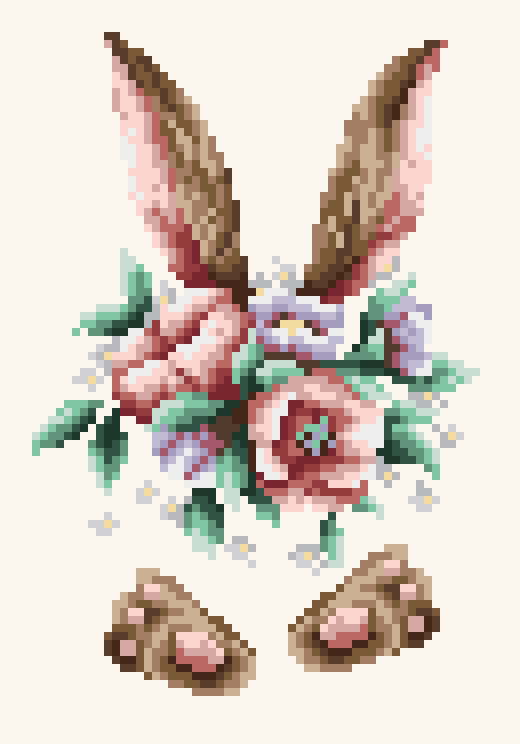
Is the Imperial Court Lady pattern suitable for a first project? No — it is rated Advanced (30 colors, 200 x 200 stitches). We recommend at least two or three finished medium projects before starting it. A better first Chinese-inspired piece is the Rabbit Ears and Flower pattern (59 x 87 stitches, 23 colors).
Do Chinese-style patterns use special stitches? No. They use the same full cross, half cross, and backstitch as any chart — the style comes from the design, not the technique. If you can read a symbol chart, you can stitch this style.
What fabric count should I use for a 200 x 200 stitch chart? On 14-count Aida the piece finishes around 14 x 14 inches; on 16-count it drops to about 12.5 x 12.5 inches. Choose based on your frame size. Our Aida count guide covers the trade-offs in detail.
Where can I see more Chinese-inspired patterns? The flower patterns collection includes several pieces with Chinese folk-art influence, and our paper-cut style guide explores the related folk-art tradition.
More Ways to Explore Chinese Craft
Chinese culture offers endless inspiration for stitchers. If you enjoy paper-cut art, our guide on Chinese paper cut cross stitch for beginners shows how the crisp, bold shapes of paper cutting translate beautifully into counted patterns. If you are new to reading charts entirely, start with our how to read a cross stitch chart tutorial before diving into a large project.
Start Stitching Chinese-Inspired Designs Today
Ready to bring a piece of imperial elegance to your needlework? Explore our full cross stitch pattern collection, where every design includes a complete DMC color key and printable blueprint. New to our studio? Grab the free mini fruit cross stitch pattern to try a small project first — or jump into the rich detail of the Imperial Court Lady today.