
Cross stitch is the same all over the world — X marks the spot. But the design is where a piece becomes yours, and few design traditions are as instantly recognizable as Chinese paper-cutting, or jianzhi.
If you’ve ever seen a red paper-cut rabbit or a delicate paper-cut flower on a window, you already know the look: bold shapes, clean negative space, and a folk-art charm that feels both ancient and fresh. Now imagine that look worked in DMC floss — that’s exactly what our patterns are inspired by.
What Is Chinese Paper-Cut Style in Cross Stitch?
Chinese paper-cutting is a folk art over a thousand years old. Artists cut red paper into auspicious symbols — flowers, animals, the zodiac, the character for good fortune (福). The style translates beautifully to cross stitch because:
- Bold, simple shapes — large color blocks mean easy stitching with less confetti
- Strong contrast — typically one or two dominant colors, sometimes with an accent
- Symbolic meaning — every motif carries a wish: happiness, longevity, prosperity
- Instant recognizability — a paper-cut style piece looks like nothing else on your wall
For stitchers, that last point matters: stitch a paper-cut style piece and people will ask where you bought it.
A Short History of Paper-Cutting
Paper-cutting began during the Northern and Southern dynasties (about 1,500 years ago) and reached its golden age in the Ming and Qing dynasties, when women across China would cut red paper for window decorations during the Spring Festival. Each region developed its own dialect of the art: the delicate multi-layered cuts of southern cities like Yangzhou, the bold silhouettes of northern Shaanxi, and the highly patterned cuts of Gaomi in Shandong.
The motifs are never random. A fish means surplus every year (nian nian you yu), a bat means fortune (the word for bat sounds like the word for good luck), a pair of mandarin ducks means a happy marriage, and the pomegranate, with its many seeds, means many children. When you stitch these motifs, you are carrying a thousand years of visual language into a modern hobby.
The Symbolism of Common Paper-Cut Motifs
Part of the joy of stitching a paper-cut style design is knowing the story in the stitches. The same motifs appear across centuries of Chinese folk art, and each one carries a wish — the red paper was never just decoration:
| Motif | Meaning | Where you’ll see it |
|---|---|---|
| Fish (鱼) | Surplus and abundance every year | New Year decorations, kitchens |
| Bat (蝠) | Fortune — the word sounds like “good luck” | Weddings, ceiling corners |
| Peony (牡丹) | Wealth and honor | Spring festivals, bridal pieces |
| Lotus (莲) | Purity and renewal | Scholar studies, summer themes |
| Mandarin ducks (鸳鸯) | A happy, faithful marriage | Wedding gifts |
| Pomegranate (石榴) | Many children, family growth | Housewarmings |
These wishes were originally meant for window panes and doorways; stitched in floss, they become year-round pieces that carry the same blessing into any home. In cross stitch, the symbols gain something extra: a chart you can count on, and a gift you can explain. Our Lotus Charm pattern is a full expression of the lotus motif, and the Rabbit Ears and Flower chart nods to the zodiac rabbit. Because the style leaves generous negative space, even a small paper-cut chart stitches up fast — the perfect weekend project between bigger pieces.
Where you hang a paper-cut style piece can follow the same traditions: a fish or bat motif near the doorway welcomes fortune into the home, a peony in the living room honors wealth and prosperity, and a lotus in a study or bedroom carries the wish for purity and calm. In Chinese custom, red-and-gold pieces are especially welcome around the Spring Festival — a stitched paper-cut design is a gift that keeps its meaning for decades, long after a paper window decoration has faded.
New to counted work entirely? Our cross stitch guide for beginners teaches charts and first stitches in one sitting.
Why Paper-Cut Style Works So Well in Cross Stitch
The two crafts share a secret: both are about deciding what to leave out. A paper-cutter removes everything that is not the shape; a cross-stitcher leaves every square unstitched unless the chart says otherwise. The result is that paper-cut motifs translate to charts almost one-for-one:
- Flat color areas become long runs of the same DMC color — fast, relaxing stitching.
- Clean outlines become backstitch lines, which read beautifully at 14-count Aida.
- Negative space becomes untouched fabric, so even a 50 x 50 chart looks confident and complete.
If you have ever stitched a photographic chart with 40 colors and endless confetti, a paper-cut style project will feel like a holiday.
Why Our Patterns Are Different
Many “Chinese style” charts online are mass-produced conversions of photos. We draw every chart by hand, inspired by traditional folk motifs, and we keep three promises on every product page:
- Original designs only — every chart is created by ZhiYuan Studio, never copied from another brand
- Full DMC color keys — every symbol maps to a real DMC thread number with estimated yardage
- Honest difficulty ratings — if a chart says Easy, a beginner can finish it in a weekend
You can check the DMC color count, stitch count, and finished size on every product page before you buy — no surprises after checkout.
Which of Our Patterns Feel Most “Paper-Cut”?
Most of our Chinese-inspired pieces carry the folk-art spirit in their composition rather than in an obvious red-on-white palette:
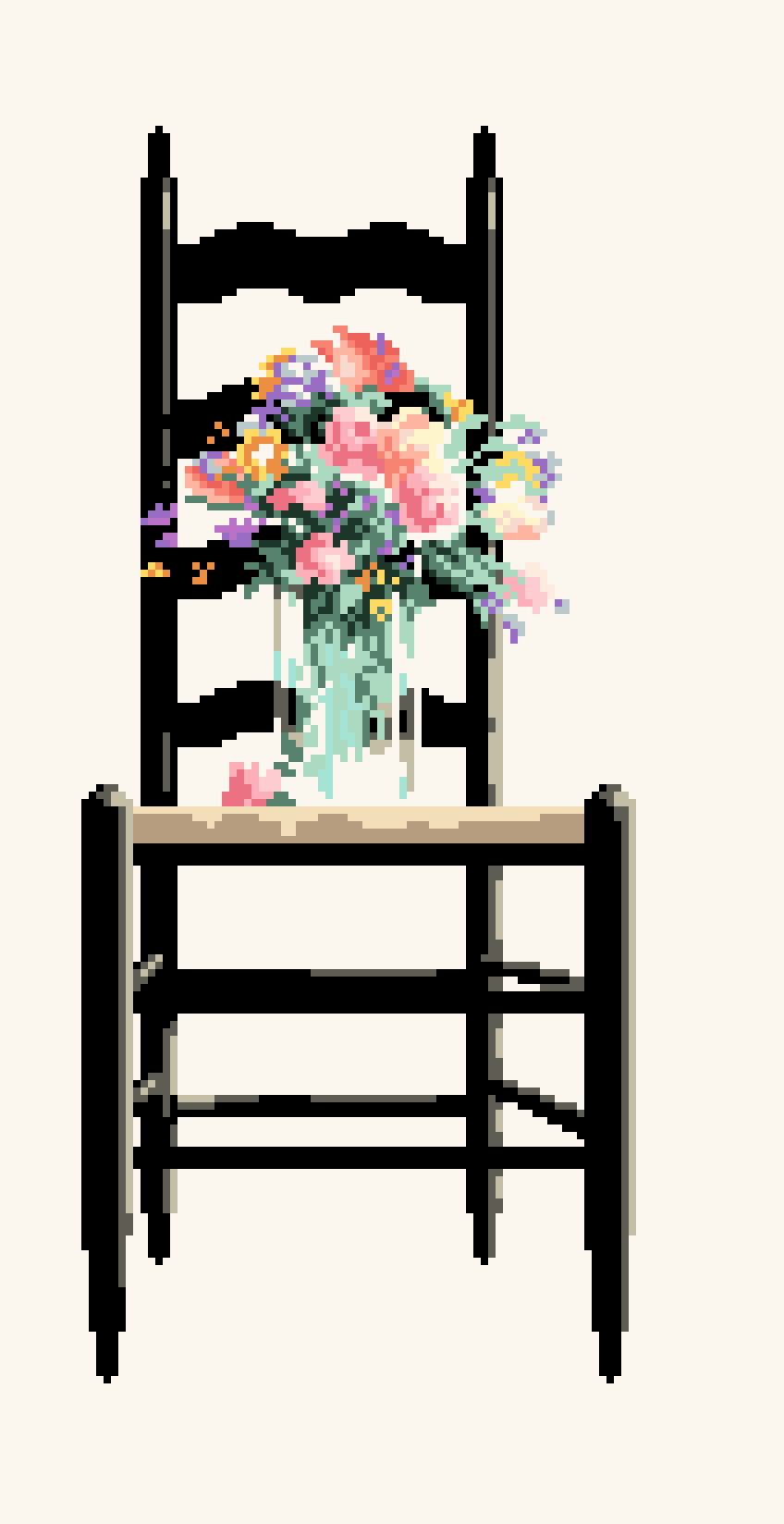
- Vase on a Chair — a classic Chinese still-life composition: a vase of flowers on a wooden chair. The clean outlines and balanced negative space give it that folk-art rhythm. It’s rated Medium, 23 colors, 100 x 200 stitches — a beautiful first “bigger” project.
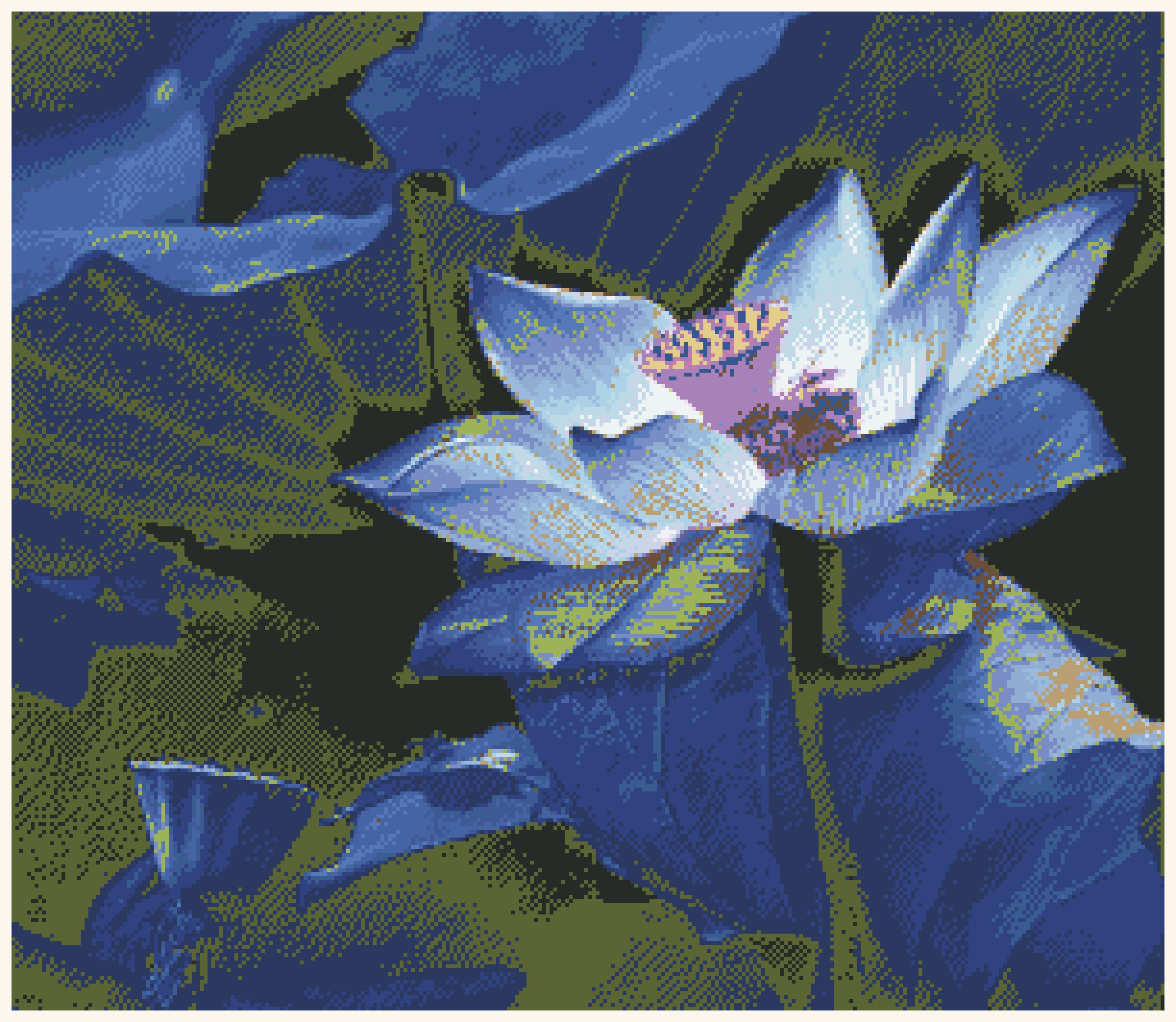
- Lotus Charm — the lotus is one of the most auspicious symbols in Chinese culture, standing for purity and renewal. This is our largest floral chart (300 x 260 stitches, 24 colors), so it’s a commitment — but the finished piece is stunning.
- Rabbit Ears and Flower — playful and graphic, with the kind of bold silhouette you’d find in a paper-cut of the zodiac rabbit.
If you want to try the style before committing, our free mini fruit pattern is a 50 x 50 chart with only 6 colors — a perfect first taste.
How to Stitch a Paper-Cut Style Piece Well
The style rewards a few simple habits:
- Use 2 strands of floss on 14-count Aida for a full, solid look — the “filled” feeling is the whole point
- Start from the center (most charts mark it) and work outward
- Don’t skip the backstitch if the chart includes it — paper-cut style relies on clean outlines
- Iron the finished piece before framing — crisp fabric makes the bold shapes pop
One extra tip: choose a contrasting fabric color. A red-and-gold paper-cut style design on white Aida is classic, but the same chart on dark navy fabric takes on a completely different, modern mood — and since paper-cut style leaves generous negative space, the fabric color does half of the design work for you.
One detail that surprises many first-time stitchers is how well symmetrical paper-cut motifs translate to cross stitch. Traditional window decorations are folded and cut in half, so the finished design mirrors perfectly around its center line. Our paper-cut patterns keep that symmetry: stitch the left side, then mirror your stitches on the right, and the result looks hand-cut. For your first project, choose a chart with fewer than 25 colors and a finished size under 6 inches — large enough to show the lace-like detail, small enough to finish in a weekend.
Frequently Asked Questions
Is “paper-cut style” cross stitch different from regular cross stitch? No — the stitches are identical. “Paper-cut style” describes the design: bold shapes, flat color areas, strong outlines, and symbolic motifs. If you can stitch a basic chart, you can stitch this style; many beginners find it easier because there is less color confetti.
Do I need to understand Chinese symbolism to stitch these patterns? No, but it makes the hobby richer. The pattern page explains each design’s meaning, and the symbolism gives you a story to tell when you gift the finished piece.
Are paper-cut style patterns only red and white? Traditionally yes, but modern interpretations use any palette. Our Chinese-inspired charts use the full DMC range — the style lives in the composition and negative space, not in a single color.
Which paper-cut style pattern should I start with? Start with the Rabbit Ears and Flower (59 x 87 stitches, 23 colors) or the free mini fruit pattern (50 x 50, 6 colors). Save the 300 x 260 Lotus Charm for when you want a months-long project with a showpiece finish.
Where Does the Name ZhiYuan Come From?
“Zhi Yuan” comes from zhi (纸, paper) and yuan (缘, fate or connection) — a small nod to the paper-cut tradition that inspires us. Every pattern is designed with that spirit: something hand-made, meaningful, and stitched to be kept.
Start This Weekend
Whether you want a quick mini project or a big statement piece, every pattern on this site is:
- An instant PDF download (A4, 300 dpi, print at home or follow on a tablet)
- Packed with a DMC color key, symbol chart, materials list, and beginner guide
- Covered by a 14-day replacement or refund guarantee
Browse the collection · Grab the free pattern · Read the guide to Chinese embroidery styles
Happy stitching! — ZhiYuan Studio