
Flowers are the most popular subject in cross stitch for good reason: they look beautiful with just a few colors, small mistakes disappear into petals and leaves, and a finished flower design makes a lovely gift, card, or wall decoration. If you are looking for a flower cross stitch pattern for beginners, the ten ideas below are the perfect starting point — every one of them works well on 14-count Aida with basic stitches only.
Before you buy anything, here is the short version: the best flower for a beginner is the one you actually want to look at for twenty hours. All ten flowers below are beginner-friendly, but they teach slightly different skills, so read the notes and pick the project that excites you.
Why Flowers Are the Perfect First Project
Beyond being beautiful, flowers are structurally ideal for early stitching. Here is why they beat almost any other subject as a first project:
Three things make flowers uniquely forgiving for new stitchers:
- Color gradients hide tension wobble. Petals blend several shades of the same hue, so a slightly uneven stitch is invisible from normal viewing distance.
- Small, repeated motifs build rhythm. Daisies, violets, and forget-me-nots repeat a tiny motif dozens of times — perfect for learning consistent stitch tension.
- Finished pieces are instant gifts. A single flower in a hoop needs no frame, no backing, and still looks like a thoughtful handmade present.
What to Look for in a Beginner Flower Chart
Not every flower chart is beginner-friendly. Before you choose, check for these five qualities:
- Fewer than 10 DMC colors. Every additional color means more thread changes and more chances to lose your place.
- Basic symbols only. Full cross and backstitch are enough. Avoid charts heavy with quarter stitches and French knots until your second project.
- A 10×10 grid with center arrows. A clear chart grid is worth more than a pretty design; you will spend hours looking at it.
- A stitched preview photo. Seeing the finished piece before you start tells you what “done” looks like and keeps motivation high.
- Listed finished size. You want to know whether this flower becomes a 4-inch ornament or a 12-inch wall piece before you buy fabric.
The 10 Best Flowers to Cross Stitch for Beginners
1. Sunflowers
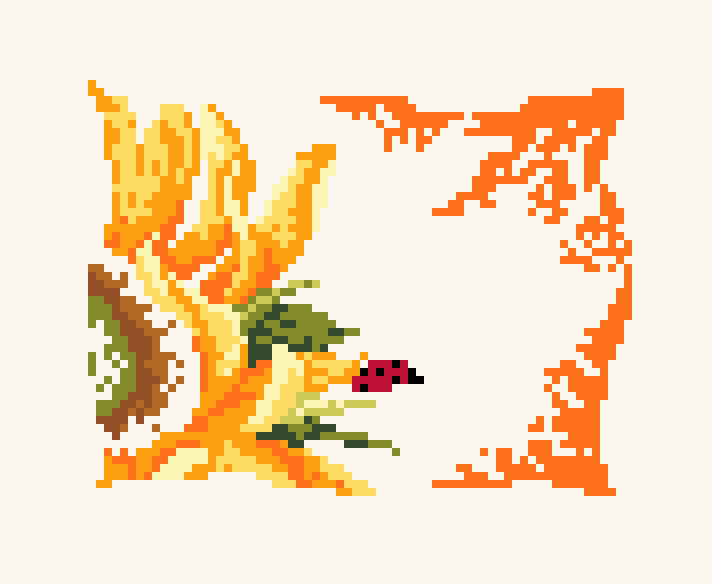
Sunflowers are bold, cheerful and forgiving. Their large petals and strong colors mean your stitches do not need to be perfect to look great. A simple sunflower chart with 6-10 colors is an ideal first project. Sunflowers also teach you how to work in radial sections — petals arranged around a center — which is a skill you will reuse in every round flower you ever stitch.
2. Daisies
Daisies are small, quick and endlessly repeatable. A single daisy takes an evening to stitch, which makes it the best way to learn counting and rhythm before moving to bigger designs. White petals on a blue or green background use almost no color blending, so the chart stays easy to follow even when you are tired.
3. Lavender
Lavender sprigs use just two or three purple and green tones. The vertical lines of a lavender bunch train you to work in straight columns — excellent practice for larger projects later. Lavender also looks modern: a single sprig in a hoop is a favorite design for kitchens, bathrooms, and handmade cards.
4. Peonies
Peonies look complex but use only a handful of pink shades. Their layered petals are a great introduction to blending colors and adding depth without backstitch. Start with a medium peony chart (the ones labeled “medium” at ZhiYuan are roughly 150 x 150 stitches, about a week of evening stitching) and you will learn shading by color value alone.
5. Roses
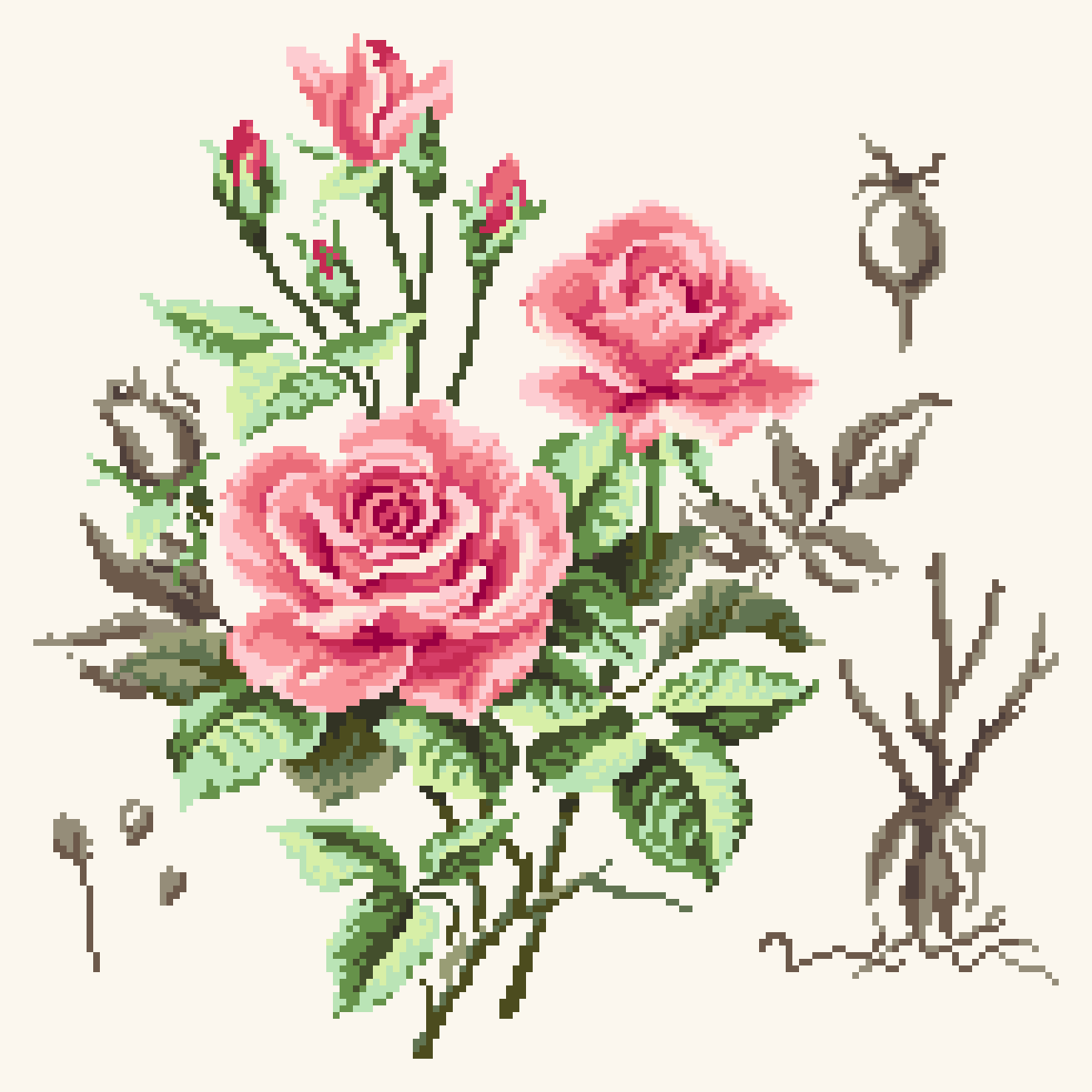
Roses are a classic. Start with a simple outline-style rose chart before trying a realistic one — the shape is recognizable even with basic stitching, and rose motifs suit cards, hoops and cushions. The shadowed rose designs with soft gray-pink shading are the next step up: they teach you how adjacent shades of the same color create volume, the single most useful skill in realistic cross stitch.
6. Tulips
Tulips have a clean, simple silhouette that reads clearly from a distance. A tulip chart is perfect for learning to follow a chart section by section without getting lost, because the stem, leaves, and bloom are three separate, easy-to-isolate areas. Work the bloom first, then the leaves, then the stem, and the design comes together in exactly that order.
7. Lilies
Lilies introduce you to stitching larger single flowers with white and cream threads. They also look stunning on dark fabric, a fun variation to try once you feel confident. White-on-dark designs force you to pay attention to which white shade is which — a challenge that pays off in every future project.
8. Violets
Violets are tiny and fast. A cluster of violets is a weekend project that teaches you how to keep track of many small elements on one chart. Because each bloom is only a few stitches wide, violets are also the best way to practice quarter stitches — the small diagonal fills that add life to petals.
9. Cherry Blossom Branches
Cherry blossom branches are trendy, delicate and surprisingly simple. Soft pinks on white fabric create a modern look that fits any room, and the branch lines give you gentle backstitch practice. Japanese-style cherry blossom charts are also the most likely flower design to become a year-round wall piece rather than a one-time gift.
10. Forget-Me-Nots
Forget-me-nots are the classic beginner flower: tiny blue blooms, minimal colors, maximum charm. They are also perfect for borders and name hoops. Because the motif is so small, you can stitch a full border of forget-me-nots around a name or date without ever needing a second color.
Flower Difficulty Quick Reference
| Flower | Difficulty | Colors | Best first for |
|---|---|---|---|
| Sunflower | Easy | 6-10 | Radial stitching, bold color |
| Daisy | Very easy | 3-5 | Counting and rhythm |
| Lavender | Easy | 2-3 | Straight columns |
| Peony | Medium | 6-8 | Color blending and shading |
| Rose | Easy-Medium | 5-9 | Classic motifs, volume shading |
| Tulip | Easy | 4-6 | Section-by-section work |
| Lily | Medium | 4-7 | White shades, dark fabric |
| Violet | Easy | 3-4 | Quarter stitches, small motifs |
| Cherry blossom | Easy-Medium | 5-7 | Backstitch branches |
| Forget-me-not | Very easy | 2-3 | Borders and tiny repeats |
What to Buy for Your First Flower Project
You do not need a big stash to start. For any of the ten flowers above, this list is enough:
- One piece of 14-count Aida, at least 4 inches larger than the finished size on every side.
- An embroidery hoop (5-7 inches for most flower charts).
- A pack of assorted embroidery needles (size 24 works with 14-count Aida).
- The DMC threads listed in the pattern’s color key. Our DMC floss guide explains how to read the numbers and how much thread to buy.
- Small, sharp scissors.
How to Turn Your First Flower Into a Finished Gift
The fastest way to keep your stitching momentum is to finish something small properly. A single flower needs no elaborate framing:
- Hoop display: trim the fabric to a circle about 2 inches larger than the hoop, lace the back with running stitches, and the hoop itself becomes the frame.
- Greeting cards: stitch a daisy or violet on 14-count Aida, cut it to card size, and glue it to a folded card blank with fabric glue.
- Mini wall sets: stitch three small flowers with matching palettes and hang them in a row for an instant gallery wall.
Whatever you choose, iron the finished piece face-down on a towel before framing — crisp fabric makes even simple flowers look polished. And if this is your very first project, our complete cross stitch guide for beginners walks through supplies and the first few stitches before you open the chart.
Frequently Asked Questions
How long does a beginner flower pattern take? A small daisy or violet chart takes one evening. A medium flower (150 x 150 stitches) takes roughly a week of one-hour evening sessions. The size in stitches on the pattern page is the best predictor.
Should I learn on a flower or something simpler first? A single flower is already simple enough. The easiest possible start is a two-color design like our free mini fruit cross stitch pattern, which teaches the mechanics in one sitting before you commit to a flower.
Which flower should I avoid as a complete beginner? Skip anything labeled “advanced” and skip realistic roses with more than 15 colors. A medium rose or peony is a fine second project, but the very first project should be under 10 colors with basic symbols only.
Do flower charts need backstitch? Some do, some do not. Backstitch adds the crisp outlines around petals and leaves. Our medium flower charts include backstitch lines, while the easy ones are cross-stitch-only — check the pattern description before buying if you want to avoid it.
Where to Find Beginner Flower Charts
Our flower cross stitch pattern collection includes easy, medium and advanced charts of all the flowers above. Every pattern is an original design with a printable PDF chart, DMC color codes, stitch counts and a beginner guide page. Start with an easy pattern — most take only a few evenings to finish. If a specific flower has caught your eye, the purple hyacinth cross stitch pattern and pink rose shadowed flower pattern are the two most popular beginner picks in the collection, both stitched on 14-count Aida with fewer than 25 colors and clear symbol charts.